Kew Gardens by cargo bike: a family day out along the Thames
Some days deserve the long way round. Kew Gardens sits a proper ride from Mayfair — this is the furthest we send families on a cargo bike — but the route there follows the Thames almost the whole way, and the gardens themselves are worth every one of those kilometres. Glasshouses full of jungle, a walkway through the treetops, a ten-storey pagoda guarded by eighty gold dragons. Bring a full day and a decent appetite.
Before you roll
- Distance: roughly 24–26km round trip from Mayfair — genuinely our longest route. Flat throughout, but long.
- Timing: Kew Gardens opens from 10am, with last entry an hour before closing (closing time varies by season, from around 4pm in winter to 8pm on summer weekends) — check kew.org before you go. Budget the whole day: getting there is only half of it, and the gardens reward slow wandering.
- Tickets: Kew Gardens is a paid, ticketed attraction. Book online in advance — it’s usually cheaper than paying on the gate, and some days (Tuesdays, historically) run a discounted rate.
- The route: mostly Thames Path and riverside parks, with a handful of short on-road stretches through Putney and Hammersmith where the path gives out. Not a fully car-free ride, but close to it, and flat the entire way.
- Pace yourself: this is a big day for small legs. The e-assist does the real work on the way home, when everyone (adults included) has had enough of walking.
Along the river to Kew
~60–75 minutes from Mayfair
The route follows the Thames almost the whole way: through Battersea Park, along the river at Wandsworth and Putney, past the boathouses and rowing clubs at Barnes, and on through Duke’s Meadows into Chiswick. It’s one of the nicer rides London offers — the city thins out, the river stays close, and there’s usually a heron sulking on a mooring post somewhere along the way. Stop at any of the riverside parks if little legs (or patience) need a break; most have a playground within sight of the water.
The Palm House: a Victorian jungle under glass
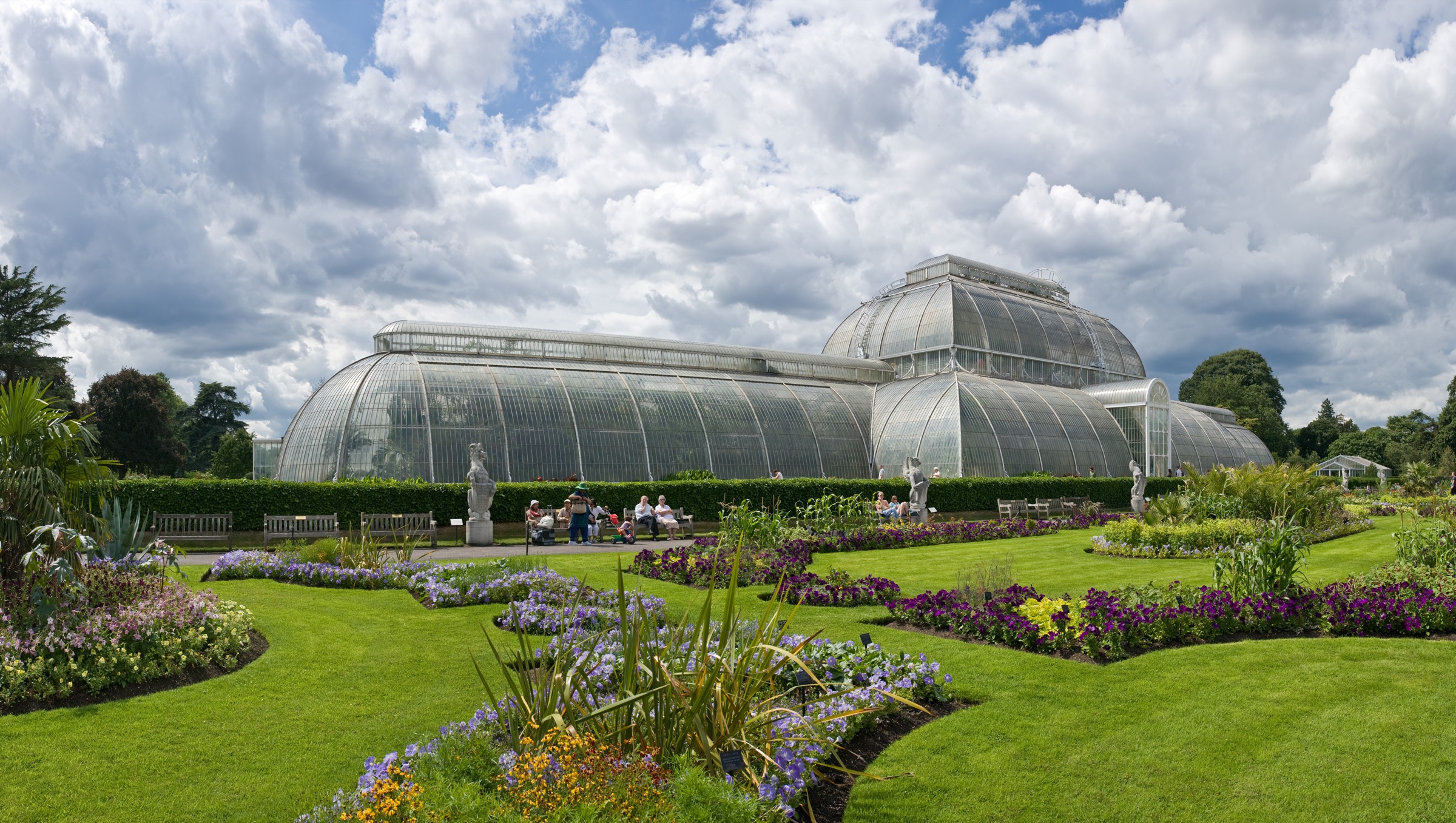
Kew’s most photographed building is also its best introduction. Built in the 1840s, the Palm House is a curved wall of iron and glass housing a genuine tropical rainforest — hot, humid, and packed with palms that have been growing under that roof since before your great-grandparents were born. A spiral staircase takes you up to a walkway through the canopy, which is the part children remember.
The Treetop Walkway: 18 metres up, in the trees
A steel walkway strung 18 metres above the ground, running 200 metres through the crowns of some of Kew’s oldest trees. It’s free with general admission, though getting up there means climbing a proper staircase rather than rolling a buggy up — worth knowing before you commit everyone to it after a big lunch. The reward is a view over the gardens you don’t get anywhere else, and the gentle sway of a structure that’s built to move slightly in the wind, which either delights or mildly alarms children in roughly equal measure.
The Children’s Garden and The Hive
Kew’s Children’s Garden is a dedicated natural play area — slides, tunnels, water play, and a bamboo maze — built for exactly the age range that finds Victorian botany a bit slow. Nearby, The Hive is a striking aluminium lattice structure that hums and lights up in response to real activity in a working beehive elsewhere in the gardens, which is a stranger and better idea than it sounds. Both are usually included in general admission — check current details on the day.
The Great Pagoda: eighty dragons and a very long view
Ten storeys of restored Georgian folly, with eighty gold dragons returned to its eaves during a 2018 restoration after the originals were removed (rumour has it, sold to pay the king’s debts) more than two centuries ago. Climbing to the top is sometimes a separately ticketed, timed-entry add-on rather than part of general admission — check kew.org when you book if reaching the summit matters to your day.
The loop at a glance
| Stop | Highlight | Notes |
|---|---|---|
| Thames Path (Battersea to Chiswick) | Riverside riding, playgrounds en route | Mostly flat and car-free |
| Palm House | Victorian glasshouse, tropical canopy walkway | Included with general admission |
| Treetop Walkway | 18m-high, 200m canopy walk | Free with admission; stairs only |
| Children’s Garden & The Hive | Natural play, interactive art/bee installation | Usually included with admission |
| Great Pagoda | Ten storeys, 80 restored gold dragons | Climbing the tower may need a separate timed ticket |
Total distance: roughly 24–26km round trip. Flat throughout. Our longest family route — plan for a full day.
Frequently asked questions
Is Kew Gardens good for young children?
Yes. Beyond the glasshouses, Kew has a dedicated Children’s Garden with natural play equipment built for younger visitors, plus wide lawns and space to run that most museums can’t offer.
Do we need to book Kew Gardens tickets in advance?
It’s recommended. Kew is a paid, ticketed attraction, and booking online in advance is usually cheaper than paying at the gate — check kew.org for current prices and any discount days.
Is the ride from Mayfair to Kew Gardens suitable for a family cargo bike?
Yes, it’s flat throughout and follows the Thames Path for most of the way, but at roughly 24–26km round trip it’s a full day’s ride rather than a quick outing — the electric assist matters more here than on our shorter routes.
Can you take a pushchair or buggy up the Treetop Walkway?
No — it’s reached by a staircase rather than a ramp or lift, so plan on carrying younger children up if you want the view.
Photo: Kew Gardens Palm House by Diliff — CC BY-SA 3.0 via Wikimedia Commons.
Fancy trying it yourself?
We hire electric family cargo bikes from Mayfair — and on a route this long, the motor is doing you a genuine favour by the time you turn for home. Book your ride on gozoom.uk and we’ll get you rolling.
If you make it all the way to Kew and back, we’d love to hear how the legs held up.